
Roof Replacement in Midvale, Murray, UT
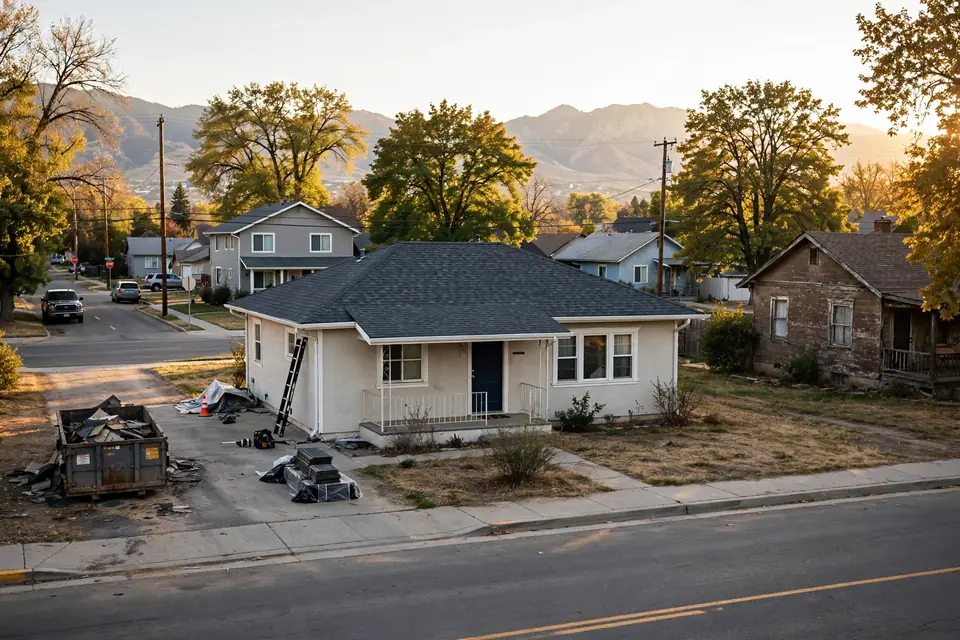
To the south, a mix of older homes and new infill. Freeze-thaw cycling is hard on aging shingles, and we document deck condition carefully on every tear-off. Homeowners in Midvale, UT 84047 can call (888) 974-0663 for a free inspection. Homeowners in Midvale, UT 84047 can call (888) 974-0663 for a free inspection. Homeowners in Midvale, UT 84047 can call (888) 974-0663 for a free inspection.
Roofing Needs in Midvale
Murray's heavy snow and freeze-thaw cycles take a steady toll on roofs across Midvale. Homes here typically wear architectural shingles rated for high wind and impact are the workhorse, while standing-seam metal is popular for shedding snow — and snow load and ice dams mean small issues escalate fast. Our free inspection documents everything with photos.
Need roof replacement in Murray? Call (888) 974-0663 today.
Call NowEmergency Quick CallReplacement Services Available in Midvale
- Energy-Efficient Cool Roof Replacement
- Roof Ventilation Upgrade
- Roof Replacement Warranties
- Skylight Replacement During Reroof
- Asphalt Shingle Roof Replacement
- Metal Roof Replacement
Specialty Roofing Services in Midvale
- Asphalt Shingle Roof Replacement in Midvale
- Cedar Shake Roof Replacement in Midvale
- Emergency Roof Replacement in Midvale
- Energy-Efficient Cool Roof Replacement in Midvale
- Insurance Claim Roof Replacement in Midvale
- Metal Roof Replacement in Midvale
- Partial Roof Replacement in Midvale
- Roof Replacement Warranties in Midvale
- Roof Tear-Off & Redecking in Midvale
- Roof Ventilation Upgrade in Midvale
- Skylight Replacement During Reroof in Midvale
- Storm Damage Roof Replacement in Midvale
Nearby Areas We Also Serve
Murray City Center
Roof replacement in Murray City Center, Murray.
Fashion Place
Roof replacement in Fashion Place, Murray.
Murray Park
Roof replacement in Murray Park, Murray.
Winchester
Roof replacement in Winchester, Murray.
Helpful Guides
The Roof Replacement Process, Step by Step
Guide from Roof Replacement Masters.
Roof Insurance Claims in Murray: How Replacement Coverage Really Works
Guide from Roof Replacement Masters.
Roofing in Midvale, UT 84047
Midvale is the valley's crossroads — historic bungalows near State Street and Midvale Main, the Fort Union commercial corridor, and waves of newer townhomes and infill, all inside the 84047 ZIP. No two streets have quite the same housing stock, which means no two roof replacements here are quite the same job.
What unites them is age: whether it's a 1940s bungalow on its third roof or a 2000s townhome on its first replacement, Midvale roofs work through the same valley snow, freeze-thaw, and summer heat. We scope each home on its own merits — full tear-off and decking inspection every time — and we price honestly for the home in front of us, not a template.
Housing and Roof Stock in Midvale
The oldest stock clusters near State Street and Center Street: small bungalows and cottages from the 1920s through the 1950s, many with multiple roofing layers accumulated over the decades and plank decking underneath. Mid-century ranches fill the blocks between State and 700 East. Then the Fort Union area and the western subdivisions add 1970s-through-2000s two-stories and townhome developments with HOA-managed exteriors.
Townhomes deserve a special note: many Midvale HOAs coordinate replacements building-by-building, and we work directly with HOA boards on phased scopes, color approvals, and common-area staging. Individual owners in HOA communities should check their CC&Rs before calling — we'll help you read the roofing section.
Architectural shingles are the standard across nearly all of Midvale's residential stock — they handle the valley climate, suit every style from bungalow to townhome, and deliver the best value per year of service. On the oldest bungalows, we frequently find original plank decking with wide gaps; those get redecked with modern sheathing as part of the job, which also stiffens the whole roof structure.
Flat and low-slope sections appear on commercial-adjacent properties and some mid-century additions — those get membrane systems tied properly into the shingled slopes. Metal roofing shows up selectively on newer builds and as accent roofing over entries and bays. Whatever the material, the tear-off is complete: Midvale's multi-layer roofs are exactly where hidden deck damage hides.
Weather and Local Factors
Midvale gets the standard valley treatment: 40-plus inches of snow in a typical winter, spring freeze-thaw that punishes marginal flashing, and summer heat that ages south slopes first. The State Street corridor adds a wind factor — the open north-south arterial funnels gusts that test shingle sealing on west-facing slopes.
Drainage is the local watch-item: many older Midvale lots have flat or poorly graded yards, so gutter and downspout performance matters more here. During replacement we re-pitch or replace gutters as needed and make sure downspouts discharge well away from foundations — a roof replacement is the right moment to fix the water path from ridge to ground.
How We Work in Midvale
The work in Midvale adapts to the home's era. On pre-1960 bungalows, we plan the job around the decking: full redeck is common, and we sister or replace any rafter tails softened by decades of eave moisture. Plank gaps get covered with sheathing rather than felted over — a 30-year shingle deserves a 30-year deck. These older homes also get their ventilation modernized, since most were built with little more than a gable vent or two.
On 70s-through-2000s homes, the work is more straightforward but the flashing still gets fully rebuilt — step flashing, counter-flashing, pipe boots, and valley metal are all replaced, never reused, because reusing 25-year-old flashing on a new 30-year roof is how leaks happen in year eight. For townhome HOAs, we phase by building, match the approved color across phases, and document each unit's completion for the board's records. Every Midvale job ends the same way: magnetic sweep, gutter check, and a photo set of the finished system.
Landmarks and Neighborhoods We Serve
State Street and Fort Union Boulevard are Midvale's spines, with Midvale Main Street's historic district, Bingham Junction, and the 7200 South corridor rounding out the map. TRAX's Blue and Red lines serve the area, which matters for staging: we schedule material deliveries around commuter peaks on the tight streets near stations.
Frequently Asked Questions
Do you replace roofs in Midvale?
Yes — Roof Replacement Masters regularly completes roof replacements throughout Midvale and the wider Murray area. Call (888) 974-0663 for a free on-site estimate.
How much does roof replacement cost in Midvale?
Pricing in Midvale follows Murray-wide rates: architectural shingle replacement typically runs $9,000 to $15,000 for an average home, depending on size, pitch, and deck condition.
My Midvale bungalow has three layers of shingles. What does that mean for cost?
It means a bigger tear-off and dump load, and near-certain redecking — three layers hide a lot. We price the removal per layer and the redecking per sheet upfront, so the estimate reflects the real job, not a lowball that grows mid-project.
I live in a Midvale townhome with an HOA. Can you work with my HOA?
Yes — we do it regularly. We'll review your CC&Rs' roofing section with you, provide the board with scope, color, and schedule documentation, and phase the work building-by-building to match how HOAs approve and fund replacements.
How long will my driveway be blocked during the job?
Typically one day. Materials stage curbside in the morning, the dump trailer loads through the day, and everything rolls out at cleanup. On tight streets near TRAX stations we schedule deliveries to avoid commuter peaks.
Do you replace gutters with the roof?
We re-hang, re-pitch, or replace as needed — the fascia is fully exposed during tear-off, so it's the cheapest time to fix drainage. We'll show you the condition of your gutters during the estimate and let you decide.