
Roof Replacement in Wheeler Farm, Murray, UT
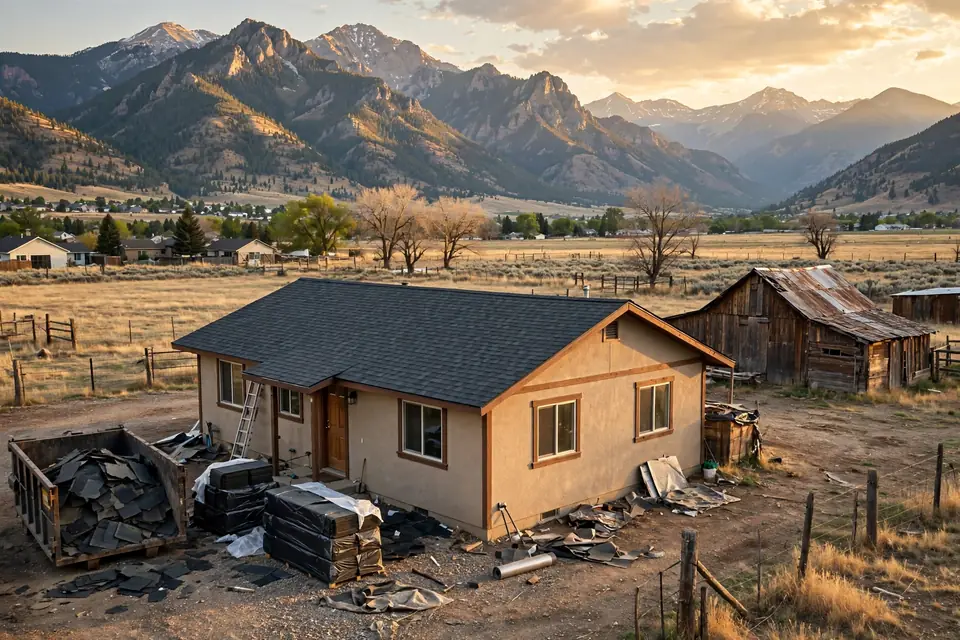
The rural-suburban edge near Wheeler Historic Farm. Larger lots, outbuildings, and homes that catch the full brunt of canyon winds off the Wasatch. Homeowners in Wheeler Farm, UT 84121 can call (888) 974-0663 for a free inspection. Homeowners in Wheeler Farm, UT 84121 can call (888) 974-0663 for a free inspection. Homeowners in Wheeler Farm, UT 84121 can call (888) 974-0663 for a free inspection.
Roofing Needs in Wheeler Farm
Murray's heavy snow and freeze-thaw cycles take a steady toll on roofs across Wheeler Farm. Homes here typically wear architectural shingles rated for high wind and impact are the workhorse, while standing-seam metal is popular for shedding snow — and snow load and ice dams mean small issues escalate fast. Our free inspection documents everything with photos.
Need roof replacement in Murray? Call (888) 974-0663 today.
Call NowEmergency Quick CallReplacement Services Available in Wheeler Farm
- Energy-Efficient Cool Roof Replacement
- Roof Ventilation Upgrade
- Roof Replacement Warranties
- Skylight Replacement During Reroof
- Asphalt Shingle Roof Replacement
- Metal Roof Replacement
Specialty Roofing Services in Wheeler Farm
- Asphalt Shingle Roof Replacement in Wheeler Farm
- Cedar Shake Roof Replacement in Wheeler Farm
- Emergency Roof Replacement in Wheeler Farm
- Energy-Efficient Cool Roof Replacement in Wheeler Farm
- Insurance Claim Roof Replacement in Wheeler Farm
- Metal Roof Replacement in Wheeler Farm
- Partial Roof Replacement in Wheeler Farm
- Roof Replacement Warranties in Wheeler Farm
- Roof Tear-Off & Redecking in Wheeler Farm
- Roof Ventilation Upgrade in Wheeler Farm
- Skylight Replacement During Reroof in Wheeler Farm
- Storm Damage Roof Replacement in Wheeler Farm
Nearby Areas We Also Serve
Murray City Center
Roof replacement in Murray City Center, Murray.
Fashion Place
Roof replacement in Fashion Place, Murray.
Murray Park
Roof replacement in Murray Park, Murray.
Winchester
Roof replacement in Winchester, Murray.
Helpful Guides
The Roof Replacement Process, Step by Step
Guide from Roof Replacement Masters.
Roof Insurance Claims in Murray: How Replacement Coverage Really Works
Guide from Roof Replacement Masters.
Roofing in Wheeler Farm, UT 84121
The Wheeler Farm area — around Wheeler Historic Farm at 6351 S 900 East, Murray, UT 84121 — is where suburbia gives way to something older: larger lots, horse properties, outbuildings, and homes that catch the full brunt of canyon winds off the Wasatch with no neighbors to break it. Roofing here serves houses and the working buildings around them.
Open exposure changes the engineering: wind uplift ratings matter more, fastening patterns get enhanced, and outbuildings — barns, shops, detached garages — often need roofing too. We scope the whole property, not just the house, and we build for the wind this corridor is known for.
Housing and Roof Stock in Wheeler Farm
Properties here are larger and more varied than typical suburbia: ranch homes on acre-plus lots, equestrian properties with barns and arenas, and working outbuildings that range from pole barns to finished shops. Home ages vary widely — mid-century farmhouses, 70s-90s suburban infill, and newer custom builds.
Outbuildings are frequently roofed with lower-grade materials than the house (or the same roof, 15 years older), and they're where we find the most deferred maintenance: rusting metal, brittle roll roofing, missing flashing. We quote house and outbuildings together or separately, your call — but we always point out what we see.
Architectural shingles on the houses, with standing-seam metal popular for both homes and outbuildings — metal's 50-year life and wind resistance suit the exposure, and on barns it's often the most economical long-term choice. Agricultural and utility buildings may use exposed-fastener metal panels, properly detailed with butyl-sealed fasteners.
Wind detailing is non-negotiable here: enhanced fastening, sealed perimeters, and ridge systems rated for the gusts this corridor sees. On outbuildings we pay special attention to eave and rake detailing, where wind gets under panels and starts the peeling.
Weather and Local Factors
This corridor's signature is wind — canyon outflow and gap winds accelerate across the open ground with nothing to slow them. Uplift, not snow load, is the design driver: shingles and panels must be fastened and sealed to stay put when the wind tries to peel them.
Snow still falls at valley-plus rates this close to the bench, and spring storms arrive wet. Freeze-thaw works the usual mischief on flashing. Summer sun is unobstructed — proper ventilation and lighter colors pay back on the cooling bill.
How We Work in Wheeler Farm
What changes about the work near Wheeler Farm is the property-wide scope and the wind engineering. We walk every roof on the property — house, garage, barn, shop — and give you a prioritized plan: what's urgent, what can wait, and what bundling saves. Outbuildings often get done the same week as the house, sharing mobilization and dumpster costs.
On the engineering side, everything here gets the high-wind treatment: enhanced fastening patterns, fully sealed starters and perimeters, and on metal, concealed-fastener standing seam where the budget allows (exposed fasteners get butyl washers and a maintenance schedule). We also detail the transitions buildings like these always have — lean-to tie-ins, cupolas, and the odd angles where additions met originals decades ago. Equestrian clients appreciate that we schedule around horses and keep the site quiet and contained.
Landmarks and Neighborhoods We Serve
Wheeler Historic Farm (6351 S 900 E) anchors the area, with the 900 East corridor, 6600 South, and the open lands toward the Jordan River defining the district. Properties have room to stage — our crews love the easy access — and outbuilding jobs often run concurrently with the house.
Frequently Asked Questions
Do you replace roofs in Wheeler Farm?
Yes — Roof Replacement Masters regularly completes roof replacements throughout Wheeler Farm and the wider Murray area. Call (888) 974-0663 for a free on-site estimate.
How much does roof replacement cost in Wheeler Farm?
Pricing in Wheeler Farm follows Murray-wide rates: architectural shingle replacement typically runs $9,000 to $15,000 for an average home, depending on size, pitch, and deck condition.
Can you roof my barn/shop as well as my house?
Yes — we scope the whole property and quote together or separately. Bundling house and outbuildings in one mobilization usually saves meaningful money on staging and disposal.
What roofing works best for a barn?
Standing-seam metal for longevity, or properly detailed exposed-fastener panels for economy — both handle the wind exposure here. We'll show you the 20-year math for each.
How do you handle the wind exposure here?
Enhanced fastening patterns, sealed starters and perimeters, and wind-rated ridge systems as standard — not upgrades. On this corridor, standard valley installation isn't enough, so we don't install it.
We have horses. Will the work disturb them?
We schedule around your animals, keep the site contained and quiet, and confirm turnout plans with you before we start. Equestrian properties are familiar territory for our crews.