
Roof Replacement in Murray City Center, Murray, UT
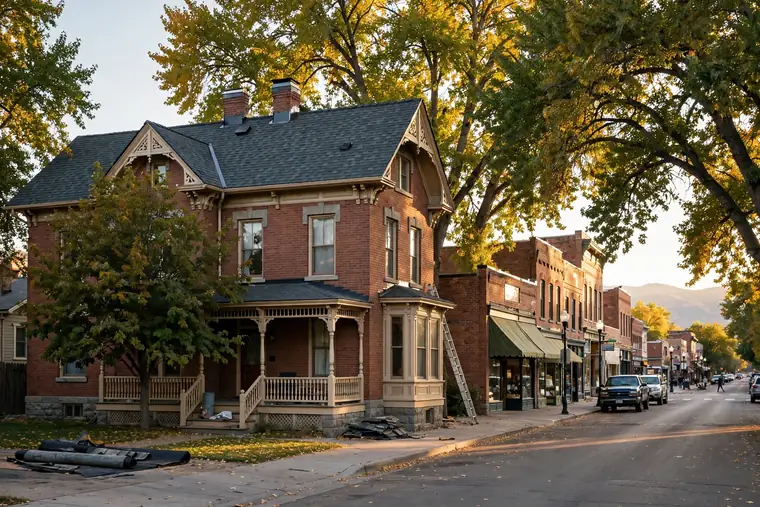
The downtown core along State Street, where older homes and small commercial buildings mix. We handle both steep-slope residential replacements and the low-slope sections common on older storefronts. Homeowners in Murray City Center, UT 84107 can call (888) 974-0663 for a free inspection. Homeowners in Murray City Center, UT 84107 can call (888) 974-0663 for a free inspection. Homeowners in Murray City Center, UT 84107 can call (888) 974-0663 for a free inspection.
Roofing Needs in Murray City Center
Murray's heavy snow and freeze-thaw cycles take a steady toll on roofs across Murray City Center. Homes here typically wear architectural shingles rated for high wind and impact are the workhorse, while standing-seam metal is popular for shedding snow — and snow load and ice dams mean small issues escalate fast. Our free inspection documents everything with photos.
Need roof replacement in Murray? Call (888) 974-0663 today.
Call NowEmergency Quick CallReplacement Services Available in Murray City Center
- Energy-Efficient Cool Roof Replacement
- Roof Ventilation Upgrade
- Roof Replacement Warranties
- Skylight Replacement During Reroof
- Asphalt Shingle Roof Replacement
- Metal Roof Replacement
Specialty Roofing Services in Murray City Center
- Asphalt Shingle Roof Replacement in Murray City Center
- Cedar Shake Roof Replacement in Murray City Center
- Emergency Roof Replacement in Murray City Center
- Energy-Efficient Cool Roof Replacement in Murray City Center
- Insurance Claim Roof Replacement in Murray City Center
- Metal Roof Replacement in Murray City Center
- Partial Roof Replacement in Murray City Center
- Roof Replacement Warranties in Murray City Center
- Roof Tear-Off & Redecking in Murray City Center
- Roof Ventilation Upgrade in Murray City Center
- Skylight Replacement During Reroof in Murray City Center
- Storm Damage Roof Replacement in Murray City Center
Nearby Areas We Also Serve
Fashion Place
Roof replacement in Fashion Place, Murray.
Murray Park
Roof replacement in Murray Park, Murray.
Winchester
Roof replacement in Winchester, Murray.
Wheeler Farm
Roof replacement in Wheeler Farm, Murray.
Helpful Guides
The Roof Replacement Process, Step by Step
Guide from Roof Replacement Masters.
Roof Insurance Claims in Murray: How Replacement Coverage Really Works
Guide from Roof Replacement Masters.
Roofing in Murray City Center, UT 84107
Murray City Center — downtown Murray around State Street, City Hall, and the historic Murray Theater — is where the city's oldest housing stock meets its newest development. 1920s bungalows and 40s cottages share blocks with new mixed-use buildings, all inside the 84107 ZIP. Roofing here means respecting the old while building to modern standards.
The historic homes have usually seen several roofing generations: original wood shingles long gone, then asphalt layers added decade by decade. Today's replacement finally strips back to the original deck — often plank, sometimes in remarkable condition, sometimes not — and builds a proper modern system on a historic frame.
Housing and Roof Stock in Murray City Center
Pre-war bungalows, post-war cottages, and early ranches make up the residential core, many with original plank decking and rafter framing sized by rules of thumb rather than engineering tables. These structures have survived 70 to 100 years because they were overbuilt — but the decking has also absorbed 70 to 100 years of moisture cycles.
Newer mixed-use and townhome infill around the downtown core adds low-slope membrane sections and parapet details to the mix. We handle both in the same week regularly: steep-slope shingles on the bungalow Monday, membrane tie-ins on the mixed-use building Thursday. Staging downtown means tight lots and alley access — we plan material delivery precisely and keep footprints small.
Architectural shingles suit the historic homes and match the downtown character. On the oldest bungalows we often recommend full redecking over plank — it creates a uniform nailing surface, stiffens the roof, and satisfies modern shingle warranties that assume solid sheathing.
Low-slope sections on additions, porches, and mixed-use buildings get dedicated membrane systems (TPO or modified bitumen) with proper drainage — ponding water is the enemy, and downtown's flat additions are where we find it. Parapet flashing and scupper details get rebuilt, not patched.
Weather and Local Factors
Downtown Murray gets standard valley weather, but the urban heat island adds a few degrees on summer afternoons — dark aging roofs downtown run hotter, which accelerates granular loss. Winter snow loads are the valley standard; the bigger winter factor for historic homes is ice dams at eaves where original insulation is thin and attics run warm.
Our replacements pair the new roof with ventilation and insulation guidance: a cool attic (well-vented, well-insulated) is what prevents ice dams, not just underlayment. We coordinate the roofing scope with the attic conditions we find.
How We Work in Murray City Center
Working on 1920s-to-1950s structures changes the job's first half: the tear-off is really an archaeological dig through roofing generations, and the deck assessment determines everything downstream. We go in expecting plank decking with surprises — sistered rafters, old patch jobs, the occasional creative framing — and we price a redecking allowance that covers the likely range, reconciled to actual sheets at the quoted per-sheet rate.
Flashing on historic homes is almost always custom: non-standard chimney sizes, odd dormer intersections, and porch tie-ins that were flashed by feel decades ago. We rebuild each one properly — step flashing woven course by course, counter-flashing seated into repointed mortar — rather than forcing stock details onto non-stock houses. For mixed-use neighbors, we phase work to keep businesses and residents undisturbed, and we document everything for property managers. Downtown jobs run tight, clean, and quiet.
Landmarks and Neighborhoods We Serve
Murray City Hall (5025 S State Street), the historic Murray Theater, and the State Street commercial corridor anchor downtown, with 4800 South and 5300 South framing the residential blocks. The Murray Downtown Historic District's streetscapes set the character bar — our replacements match the neighborhood's look while upgrading everything underneath.
Frequently Asked Questions
Do you replace roofs in Murray City Center?
Yes — Roof Replacement Masters regularly completes roof replacements throughout Murray City Center and the wider Murray area. Call (888) 974-0663 for a free on-site estimate.
How much does roof replacement cost in Murray City Center?
Pricing in Murray City Center follows Murray-wide rates: architectural shingle replacement typically runs $9,000 to $15,000 for an average home, depending on size, pitch, and deck condition.
My downtown bungalow has plank decking from the 1920s. Can shingles go over it?
Modern shingles want solid sheathing for warranty and performance. We usually recommend redecking over plank — it gives a uniform nailing surface and stiffens the structure. We'll show you the plank's condition during the estimate so the call is based on evidence.
How do you handle the tight lots downtown?
Precise scheduling: materials arrive when the crew is ready, the dump trailer loads continuously, and everything leaves the same day. We keep the footprint to your property and protect neighboring landscaping and driveways.
Will a new roof change how my historic home looks?
Only for the better. Architectural shingles in period-appropriate tones read as correct on historic homes — what changes is the crispness: straight courses, clean flashing lines, no more wavy telegraphing from failing layers underneath.
Do you work on the mixed-use buildings too?
Yes. We handle the low-slope membrane sections, parapet flashing, and scupper details on downtown mixed-use, phased to keep tenants and businesses undisturbed, with documentation for property managers.