
Roof Ventilation Upgrade in Murray, UT
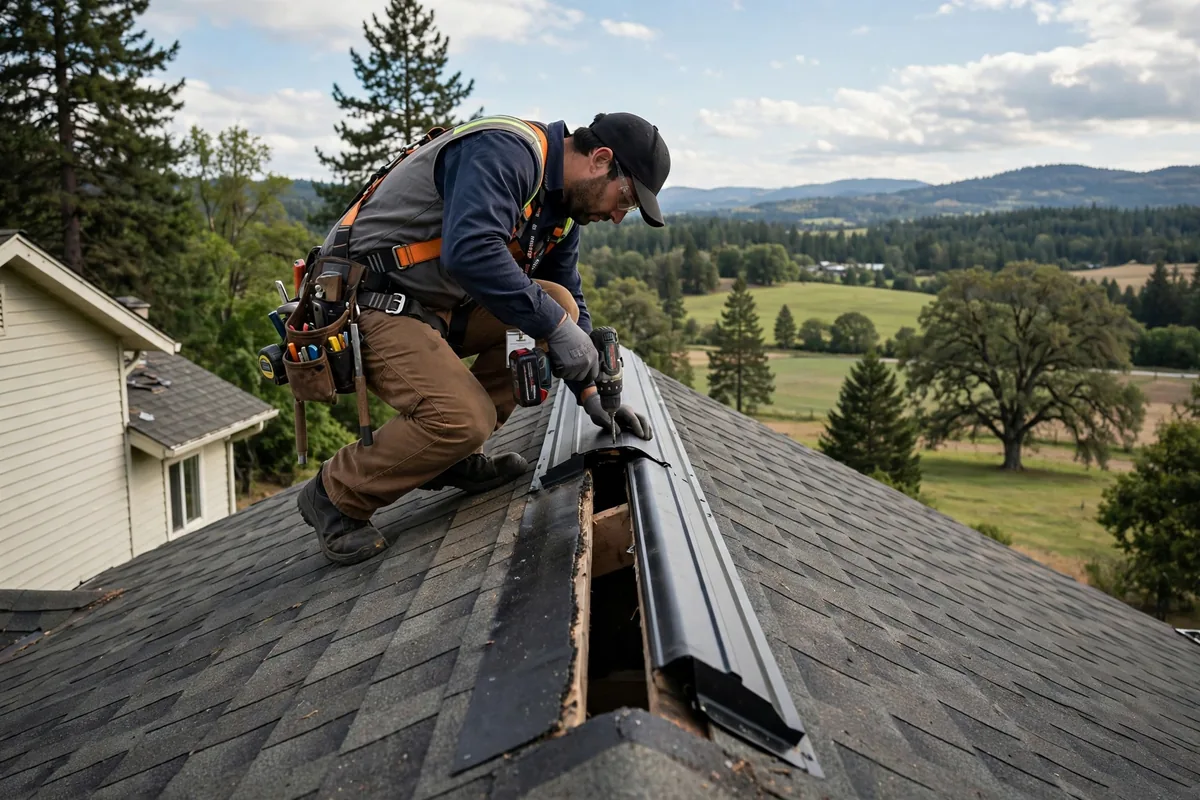
Ventilation is the most undervalued part of a roof replacement. Without balanced intake and exhaust, heat and moisture get trapped in the attic — cooking shingles from below, growing mold, and voiding manufacturer warranties. Every roof replacement we do in Murray includes a ventilation assessment, and most include an upgrade to a properly balanced system.
What This Service Includes
We calculate your attic's net free vent area against the 1:150 (or 1:300 with vapor barrier) standard, then design intake (soffit vents) and exhaust (ridge vent, and in some cases powered or solar vents) as a balanced system. The upgrade happens while the roof is open, when adding ridge vent or correcting blocked soffits is straightforward.
Need roof replacement in Murray? Call (888) 974-0663 today.
Call NowEmergency Quick CallSigns You Need This Service
- Excessive attic heat in summer
- Mold or mildew on attic sheathing
- Frost on the underside of the deck in winter
- Curling shingles on a relatively young roof
- Ice dams despite adequate insulation
How We Do It Right
Ridge vent paired with clear soffit intake is the gold standard for most Murray homes — silent, passive, and effective. We also correct the common problems we find: painted-over soffit vents, blocked baffles, bathroom fans venting into the attic, and mixed exhaust types fighting each other. Proper ventilation can add years to a new roof's life and is required to keep most manufacturer warranties valid.
Roof Ventilation Upgrade for Murray Homes
heavy Wasatch Front snow, freeze-thaw cycles, and intense high-altitude UV make attic ventilation critical in Murray: trapped heat cooks shingles from below and voids warranties. We design balanced ventilation into every replacement.
Related Roofing Services
Asphalt Shingle Roof Replacement
Architectural shingle replacement for Murray homes: full tear-off, new underlayment, and premium shingles rated for heavy snow and freeze-thaw cycles.
Metal Roof Replacement
Standing-seam and exposed-fastener metal roof replacement in Murray — 40-70 year lifespan, fire resistance, and energy-saving reflectivity.
Cedar Shake Roof Replacement
Cedar shake and shingle replacement for Murray homes, installed over ventilated battens for maximum wood-roof life.
Storm Damage Roof Replacement
Storm damage assessment, carrier-grade documentation, and full replacement for Murray homes hit by heavy snow and freeze-thaw cycles.
Areas We Serve
South Salt Lake
Roof replacement in South Salt Lake, Murray.
Millcreek
Roof replacement in Millcreek, Murray.
Murray City Center
Roof replacement in Murray City Center, Murray.
Fashion Place
Roof replacement in Fashion Place, Murray.
Helpful Guides
Roof Ventilation During Replacement: The Upgrade Most Homes Need
Guide from Roof Replacement Masters.
7 Signs Your Murray Home Needs a Roof Replacement
Guide from Roof Replacement Masters.
Materials We Install
Ridge vent is the exhaust standard: continuous, low-profile, and matched to the roof's ridge length. For intake, we open or install soffit vents — perforated soffit panels or individual vents — sized to balance the exhaust. Baffles (rafter vents) maintain the air channel from soffit to ridge past the insulation.
On homes where ridge vent isn't feasible (hip roofs with short ridges, complex geometries), we engineer alternatives: powered or solar vents, additional box vents placed for airflow, or gable-to-ridge combinations. The principle never changes — balanced intake and exhaust, sized to the attic.
Safety on Your Property
Ventilation work means attic time — we manage the heat, dust, and insulation disturbance professionally, with respirators and lighting. Electrical awareness matters around attic wiring and junction boxes; we don't disturb what we don't need to.
For the household, standalone ventilation upgrades are low-disruption: some roof noise during ridge cutting, brief attic access needed. If we're opening soffits, expect ladder work around the eaves for a day.
Local Factors in Murray, UT
Murray's climate makes ventilation a performance issue, not a code checkbox. Summer: our intense sun superheats poorly vented attics, cooking shingles from below and loading your AC. Winter: warm attics melt roof snow from underneath, feeding the ice-dam cycle that damages eaves — the number-one preventable winter roofing problem here.
Balanced ventilation addresses both seasons: it exhausts summer heat and keeps the roof deck cold in winter so snow melts evenly from the top down. On every replacement we do, ventilation is engineered to the attic — because a premium shingle on a suffocated attic is a wasted premium.
Frequently Asked Questions
How do I know if my attic ventilation is adequate?
Our inspection measures actual intake and exhaust vent area against your attic square footage. Most homes we inspect in Murray are under-ventilated, often significantly.
Is a ridge vent enough by itself?
Only if intake exists to feed it. A ridge vent with blocked or missing soffit vents can actually pull conditioned air from the house. Balance is everything — which is why we design the system, not just the vent.
Can you upgrade ventilation without replacing the roof?
Yes — it's a standard standalone project, usually done in a day. That said, pairing it with a replacement is ideal: the ridge vent integrates cleanly into the new system and you avoid paying for roof access twice.
How do I know if my attic is under-ventilated?
The quick checks: scorching attic in summer, ice dams in winter, shingles aging prematurely, or visible moisture/frost in the attic. We measure properly during the assessment — attic square footage versus actual intake and exhaust — and show you the gap.
Will better ventilation really extend shingle life?
Measurably. Heat is a shingle killer, and half of it comes from below. Balanced ventilation keeps the deck cooler in summer and drier year-round — manufacturers' own testing ties ventilation directly to service life, and some warranties require it.
What about powered attic fans?
They have their place, but passive balanced ventilation (ridge + soffit) is more reliable — no motors to fail, no energy use, no risk of depressurizing the attic and pulling conditioned air from the house. We recommend passive first and power only where geometry demands it.