
Roof Replacement in Millcreek, Murray, UT
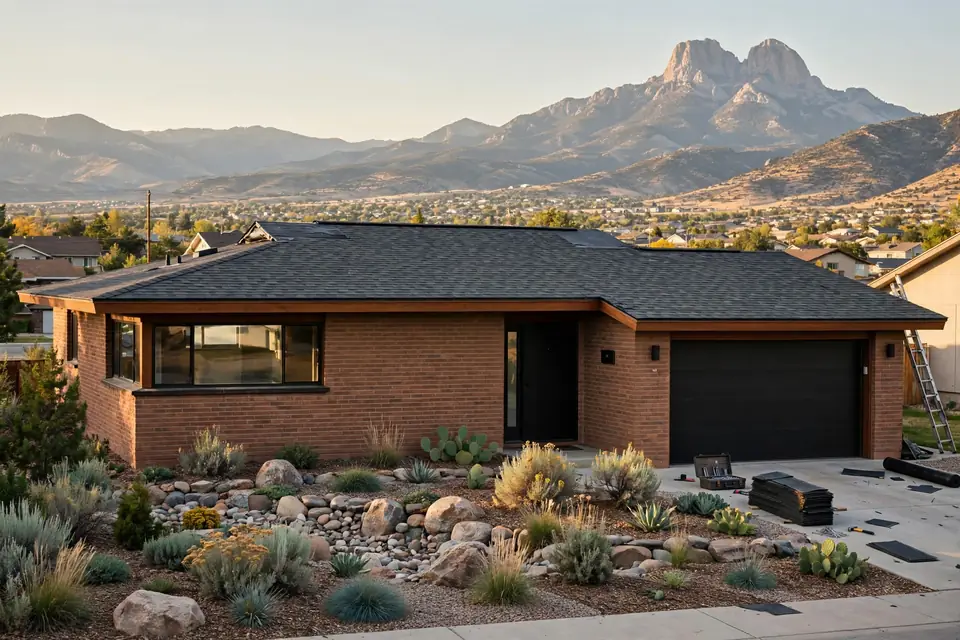
Northeast toward the foothills, where canyon winds and snow combine. We specify high-wind-rated assemblies and sealed eaves on replacements. Homeowners in Millcreek, UT 84106 can call (888) 974-0663 for a free inspection. Homeowners in Millcreek, UT 84106 can call (888) 974-0663 for a free inspection. Homeowners in Millcreek, UT 84106 can call (888) 974-0663 for a free inspection.
Roofing Needs in Millcreek
Murray's heavy snow and freeze-thaw cycles take a steady toll on roofs across Millcreek. Homes here typically wear architectural shingles rated for high wind and impact are the workhorse, while standing-seam metal is popular for shedding snow — and snow load and ice dams mean small issues escalate fast. Our free inspection documents everything with photos.
Need roof replacement in Murray? Call (888) 974-0663 today.
Call NowEmergency Quick CallReplacement Services Available in Millcreek
- Energy-Efficient Cool Roof Replacement
- Roof Ventilation Upgrade
- Roof Replacement Warranties
- Skylight Replacement During Reroof
- Asphalt Shingle Roof Replacement
- Metal Roof Replacement
Specialty Roofing Services in Millcreek
- Asphalt Shingle Roof Replacement in Millcreek
- Cedar Shake Roof Replacement in Millcreek
- Emergency Roof Replacement in Millcreek
- Energy-Efficient Cool Roof Replacement in Millcreek
- Insurance Claim Roof Replacement in Millcreek
- Metal Roof Replacement in Millcreek
- Partial Roof Replacement in Millcreek
- Roof Replacement Warranties in Millcreek
- Roof Tear-Off & Redecking in Millcreek
- Roof Ventilation Upgrade in Millcreek
- Skylight Replacement During Reroof in Millcreek
- Storm Damage Roof Replacement in Millcreek
Nearby Areas We Also Serve
Murray City Center
Roof replacement in Murray City Center, Murray.
Fashion Place
Roof replacement in Fashion Place, Murray.
Murray Park
Roof replacement in Murray Park, Murray.
Winchester
Roof replacement in Winchester, Murray.
Helpful Guides
The Roof Replacement Process, Step by Step
Guide from Roof Replacement Masters.
Roof Insurance Claims in Murray: How Replacement Coverage Really Works
Guide from Roof Replacement Masters.
Roofing in Millcreek, UT 84106
Millcreek — incorporated as a city in 2016 but a community for generations — is built on the 1950s-through-1970s brick rambler. Tens of thousands of them, from the flat streets west of Highland Drive up into Olympus Cove, all inside the 84106 ZIP and its neighbors. These homes were built to last, and they have — but their roofs are now 30 to 60 years into materials meant for 20 to 30.
The pattern we see across Millcreek is remarkably consistent: original or second roofs with granular loss, brittle south slopes, and decking that's absorbed half a century of slow moisture at eaves and valleys. Replacement here is a reset — full tear-off, honest redecking, modern ventilation — that gives a mid-century brick home another 30-plus years.
Housing and Roof Stock in Millcreek
Brick ramblers dominate, with split-levels and a strong contingent of 60s two-stories in Olympus Cove and along the east bench. Construction quality was generally high — real brick veneer, dimensional lumber — which is why the houses outlast their roofs by decades. Many homes are on their second roof now; the 90s re-roofing wave installed architectural or three-tab shingles over originals, so today's tear-off removes two layers.
Lot sizes are generous and streets are wide, which makes staging straightforward. The east bench properties climb toward the Wasatch with steeper driveways and better views — and measurably more snow. Olympus Cove homes in particular sit high enough to catch canyon spillover.
Architectural shingles are the overwhelming standard and the right call for most Millcreek ramblers — the simple gable and hip rooflines are ideal for shingles, and the value per year is unmatched. Standing-seam metal has a devoted following on the east bench, where snow-shedding and 50-year life justify the premium for owners planning to stay.
Decking is the recurring theme: mid-century sheathing — plank in the 50s, early plywood in the 60s and 70s — frequently needs partial or full replacement. We treat redecking as expected scope here, priced per sheet in the estimate. Chimney flashing on these brick homes gets fully rebuilt, with counter-flashing reground into the brick mortar joints.
Weather and Local Factors
Millcreek's west side gets standard valley weather; the east bench gets the upgrade — more snow, stronger winds, deeper freeze-thaw. Ice dams concentrate on north-facing slopes and in the shaded valleys of bench homes, where sun never quite reaches to clear the melt cycle.
Summer heat works the south and west slopes hard, and many of these ramblers still run on their original minimal ventilation — a couple of gable vents trying to cool a 1,500-square-foot attic. Every replacement we do here brings ventilation to modern balanced standards, which measurably extends shingle life and cuts summer cooling load.
How We Work in Millcreek
What changes about the work in Millcreek is the deck-first mindset. We assume mid-century sheathing will need help and we prove it out during tear-off: every sheet gets inspected, soft or delaminated sections get replaced at the pre-quoted per-sheet price, and plank gaps get sheathed over. Nailing a premium 30-year shingle to a failing 1965 deck is the most expensive mistake in roofing — it voids the material warranty's decking requirements and telegraphs every flaw.
Ventilation gets engineered as part of the system: continuous ridge vent paired with proper soffit intake, sized to the attic volume. On brick homes, we take extra care with the masonry transitions — step flashing woven shingle-by-shingle, counter-flashing cut a full inch into repointed mortar joints. Bench properties get six-nail fastening and ice-and-water shield run six feet up from eaves. The result is a roof that matches the house: built once, built right, good for decades.
Landmarks and Neighborhoods We Serve
The 3300 South corridor, Highland Drive, 2300 East, and Evergreen Park define the Millcreek map, with Olympus Cove climbing east toward the mountains. St. Mark's Hospital anchors the 3900 South medical corridor. Wide suburban streets make for clean one-day staging on most ramblers.
Frequently Asked Questions
Do you replace roofs in Millcreek?
Yes — Roof Replacement Masters regularly completes roof replacements throughout Millcreek and the wider Murray area. Call (888) 974-0663 for a free on-site estimate.
How much does roof replacement cost in Millcreek?
Pricing in Millcreek follows Murray-wide rates: architectural shingle replacement typically runs $9,000 to $15,000 for an average home, depending on size, pitch, and deck condition.
Will you have to replace all my 1960s decking?
Rarely all of it — but expect sections. We inspect every sheet during tear-off and replace only what's soft, delaminated, or gapped, at a per-sheet price quoted upfront. Most Millcreek ramblers need partial redecking, concentrated at eaves and valleys.
My rambler has almost no attic ventilation. Is that part of the job?
Yes. We bring every replacement to modern balanced ventilation — continuous ridge exhaust plus proper soffit intake — as standard scope. It's the single biggest factor in how long your new shingles last.
Can you work around my mature trees and landscaping?
Absolutely. Tarps over beds, plywood paths across lawns, and careful staging away from specimen trees. Millcreek's mature landscaping is part of what makes these streets beautiful; we protect it like it's ours.
How does the east bench change the estimate?
More snow and wind means enhanced underlayment (six feet of ice-and-water shield at eaves), six-nail fastening, and sometimes snow retention on metal — plus trickier staging on steep driveways. We itemize the bench upgrades so you see exactly what the microclimate costs.