
Asphalt vs. Metal Roof in Murray: Which Is Right for Your Home?
Published on October 14, 2026
Published on October 14, 2026
Published on October 14, 2026
This is the most common material debate we hear in Murray. The answer depends on how long you will own the home, your budget, and how you value maintenance freedom.
Upfront cost vs. lifetime cost
Architectural shingles cost roughly half to a third of standing-seam metal installed. But you will replace shingles two or three times in metal's lifespan. Over 50 years of ownership, metal is frequently the cheaper roof — over 15 years, shingles win on cash flow.
Performance in Murray's climate
Metal sheds heavy Wasatch Front snow, freeze-thaw cycles, and intense high-altitude UV superbly, resists fire, and reflects heat. Modern architectural shingles with high wind ratings and algae-resistant granules perform very well too — the gap is durability over decades, not year-one protection.
Looks, noise, and other concerns
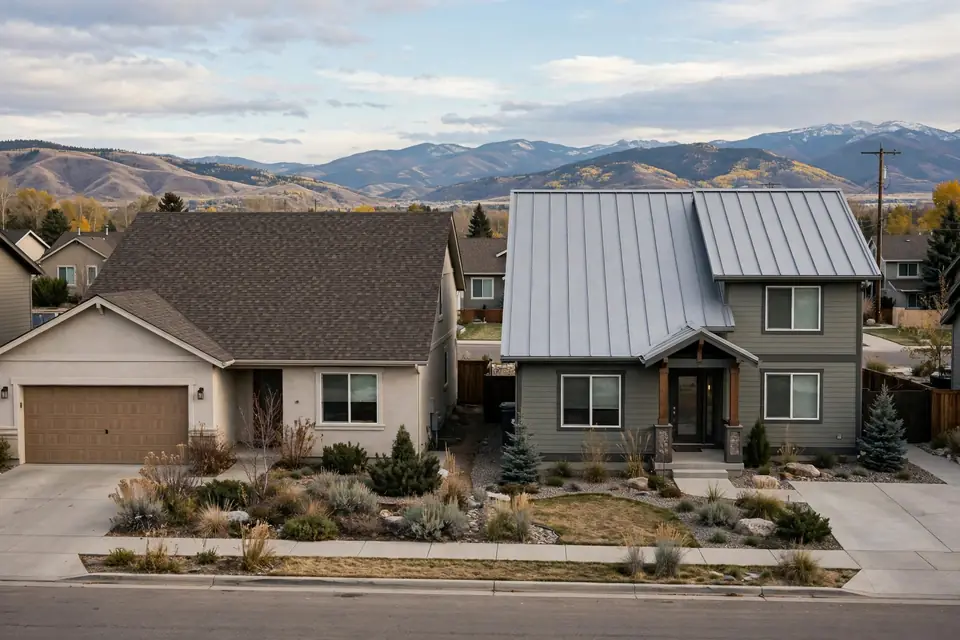
Metal now comes in profiles that mimic shingle, shake, and tile. Properly installed over solid decking with underlayment, metal is no louder than shingles in rain. Both materials offer strong color options.
The decision framework we give customers
Planning to stay 20+ years and can afford the premium? Metal. Selling within 10-15 years or budget-focused? Architectural shingles. Either way, insist on a complete system — underlayment, flashing, ventilation — because installation quality decides the outcome more than the material.
Need roof replacement in Murray? Call (888) 974-0663 today.
Call NowEmergency Quick CallRelated Services
Areas We Serve
South Salt Lake
Roof replacement in South Salt Lake, Murray.
Millcreek
Roof replacement in Millcreek, Murray.
More Guides
How Much Does Roof Replacement Cost in Murray?
Guide from Roof Replacement Masters.
7 Signs Your Murray Home Needs a Roof Replacement
Guide from Roof Replacement Masters.
The Murray-Specific Verdict
In Murray's climate, the asphalt-versus-metal decision often comes down to microclimate and hold period. Canyon-adjacent and east-bench homes — heavier snow, stronger winds — get more of metal's advantages: snow sheds before ice dams form, and the wind ratings handle gusts that peel shingles. Valley-floor homes with straightforward exposures get excellent service from architectural shingles at a much lower installed cost.
The hold-period math: under 15 years, architectural shingles usually win on cost-per-year; over 20, metal's 40-to-50-year life takes the lead, especially factoring the insurance benefits of Class A fire and Class 4 impact ratings. For the undecided, premium Class 4 architectural shingles split the difference — impact and fire ratings approaching metal's, at shingle pricing.
What About Noise, Lightning, and Cell Signal?
Three myths to retire. Noise: modern standing-seam over solid decking with underlayment and attic insulation sounds roughly like shingles — the 'noisy metal roof' comes from barn panels over open framing. Lightning: metal doesn't attract lightning; it's non-combustible, so it's actually safer in a strike. Cell signal: no meaningful effect — your phone works fine under a metal roof.
The real considerations are practical: metal costs more upfront, needs snow retention engineered (sliding snow is real), and requires a contractor experienced in metal detailing. Choose based on the honest trade-offs, not the myths.
Resale Value and Insurance: The Hidden Math
There is one more line on the spreadsheet most Murray homeowners miss: how each roof affects resale and insurance. A standing-seam metal roof consistently shows up in appraisals as a premium feature, particularly on homes near the east bench where buyers expect upgraded finishes. Real estate agents in the Salt Lake Valley report that a new metal roof can shorten time on market, because buyers read it as "nothing to worry about for decades." Architectural shingles do not carry the same premium, but a fresh architectural shingle roof with transferable warranty documentation removes a negotiation point just as effectively — buyers stop asking for roof credits.
On insurance, the story is nuanced. Most carriers do not offer a formal discount for metal the way they do in hail-belt states, but a new roof of either type — documented with photos and a paid invoice — often lowers premiums compared to an aging roof near end of life. Where metal wins clearly is claim frequency: it simply files fewer claims. Fewer claims over ten years means a cleaner loss history, and that is what underwriters reward at renewal. Whichever material you choose, send your insurer the completion photos and warranty paperwork the week the job finishes; the discount, if any, starts from documentation, not from the material alone.
Frequently Asked Questions
Does a metal roof attract lightning?
No. Metal roofing does not increase lightning strike risk, and if struck it safely dissipates the charge. It is non-combustible, which is a genuine advantage.
Can I install solar on either roof type?
Yes, but metal — especially standing seam — is the ideal solar substrate, with clamp-on mounts that never penetrate the roof. Asphalt works fine with standard flashed mounts.