
How Much Does Roof Replacement Cost in Murray?
Published on October 14, 2026
Published on October 14, 2026
Published on October 14, 2026
In Murray, UT, a full roof replacement typically costs between $9,000 and $22,000 for an average single-family home — but the honest answer depends on size, material, tear-off layers, and deck condition.
What drives the price
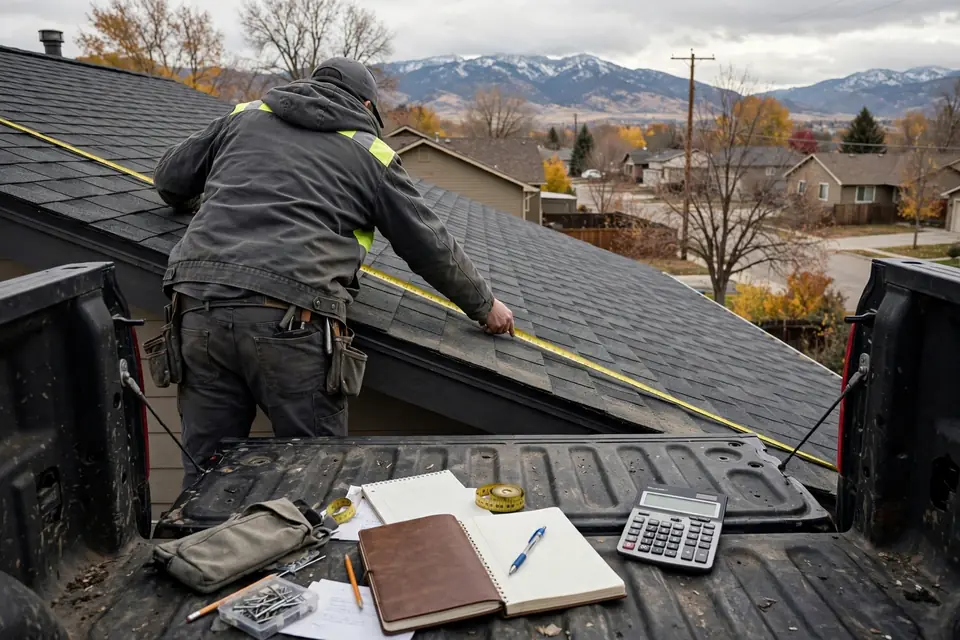
Four factors set 90 percent of the price: roof size (measured in squares, where one square is 100 sq ft), material choice (architectural shingles vs. metal vs. tile), the number of existing layers to tear off, and the condition of the decking underneath. Steep pitches, complex rooflines with dormers and valleys, and difficult access all add labor hours.
Typical cost ranges by material
For a 2,000 sq ft home in Murray: architectural asphalt shingles generally run $9,000-$15,000 installed; standing-seam metal $18,000-$35,000; concrete tile $20,000-$35,000. These are installed prices for a complete system — tear-off, underlayment, flashing, and ventilation — not material-only numbers.
The hidden costs to budget for
Redecking (replacing rotted sheathing) is the most common added cost, usually priced per sheet. Permit fees in UT add a few hundred dollars. And if your home has two or three old layers, the extra tear-off and disposal labor is real. A trustworthy estimate lists these as line items with unit prices, not vague allowances.
How to compare bids honestly
Get three written estimates and compare scopes, not just totals. The cheapest bid often omits ice-and-water shield, new flashing, or ventilation upgrades that the others include. Ask each contractor: is this a full tear-off? What underlayment? What flashing is replaced? What is the per-sheet redecking price?
Need roof replacement in Murray? Call (888) 974-0663 today.
Call NowEmergency Quick CallRelated Services
Areas We Serve
South Salt Lake
Roof replacement in South Salt Lake, Murray.
Millcreek
Roof replacement in Millcreek, Murray.
More Guides
7 Signs Your Murray Home Needs a Roof Replacement
Guide from Roof Replacement Masters.
Roof Repair vs. Replacement: How Murray Homeowners Should Decide
Guide from Roof Replacement Masters.
What Drives the Price Up or Down
Five factors dominate roof replacement pricing: size (squares — a square is 100 sq ft), pitch (steeper means slower, more safety equipment), complexity (valleys, dormers, and penetrations add labor), decking condition (redecking is priced per sheet), and material choice (architectural shingles to standing-seam metal spans a wide range). Access matters too — tight lots and steep driveways add staging cost.
What doesn't drive price: the contractor's truck decals. When comparing bids, make sure the scopes match on all five factors — a bid that's 30% lower usually omitted something (often the redecking allowance or the flashing rebuild) rather than found efficiency.
Getting an Accurate Estimate: What We Need
An accurate estimate needs the roof measured (we do this — satellite plus on-roof verification), the decking assessed (attic inspection where accessible), and the details counted (penetrations, valleys, skylights, chimney). That's why our estimates are free but not instant: the 45 minutes we spend on your roof is what makes the fixed price actually fixed.
What you should provide: the roof's age if known, any leak history (where and when), HOA requirements if applicable, and your timeline. What you'll receive: an itemized written scope with per-sheet redecking pricing, material specs, warranty terms, and a fixed total. No allowances designed to grow.
Why the Lowest Bid Is Usually the Most Expensive
The lowest bid on a roofing project is rarely the cheapest roof — it is usually the most expensive one with the longest delay. The math is unforgiving: materials cost roughly the same for every contractor buying from the same suppliers, and labor has a market rate. A bid that comes in 30% under the pack is not finding efficiencies; it is omitting something. The usual omissions: drip edge, ice-and-water shield beyond the minimum, proper ventilation upgrades, decking replacement allowance, permits, and cleanup labor. Each omission becomes a change order later, priced at emergency rates with you captive mid-project.
There is a second, quieter cost to the low bid: the warranty you think you bought. Manufacturer enhanced warranties require installation to spec — six nails per shingle in high-wind zones, specific underlayment pairings, registered installation. The crew cutting corners to hit the low price is the crew skipping exactly these details, which means the "lifetime warranty" on the brochure was void before the final inspection. When comparing bids, normalize them first: make every bidder quote the same scope in writing — tear-off depth, underlayment type, ventilation plan, flashing replacement, decking terms, cleanup standard. Then compare. The lowest normalized bid from a verifiable company is a bargain; the lowest raw bid is a trap with a bow on it.
Frequently Asked Questions
Does insurance cover roof replacement cost?
If the damage came from a covered event like wind or hail, your policy typically covers replacement minus your deductible. Age-related wear is not covered. We document storm damage to carrier standards when a claim is appropriate.
Can I finance a roof replacement?
Yes — most homeowners finance through home equity, contractor financing programs, or personal loans. Given that a roof protects everything beneath it, financing a needed replacement beats paying for interior water damage later.