
How Long Does a Roof Replacement Take in Murray?
Published on October 14, 2026
Published on October 14, 2026
Published on October 14, 2026
Most single-family roof replacements in Murray take one to three days. Here is what determines where your project falls in that range — and what the day-by-day process looks like.
The short answer by home size
A straightforward 1,500-2,000 sq ft ranch: one to two days. A 2,500-3,500 sq ft two-story with dormers and valleys: two to three days. Large, steep, or complex roofs: three to five days. Tile and slate take longer than shingles — typically a week or more.
What can extend the timeline
Multiple tear-off layers, extensive redecking, structural repairs, custom flashing fabrication, HOA approval waits, and material lead times for specialty products. Weather is the wildcard — we never tear off more than we can make watertight the same day.
A typical two-day project, hour by hour
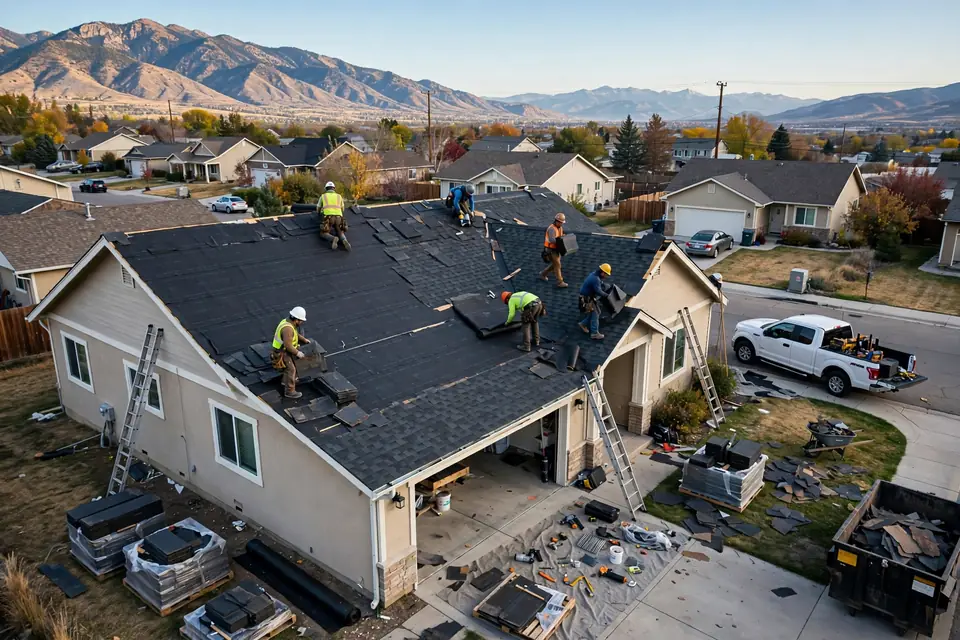
Day one: crew arrives early, protects landscaping, tears off old roofing, inspects and repairs decking, installs underlayment and dries in the roof. Day two: flashing, shingles or primary material, ridge caps, ventilation, cleanup, magnetic nail sweep, and final walkthrough with you.
How to keep your project on schedule
Clear driveway and side-yard access before crew arrival, keep pets and kids away from the work zone, and decide on material and color before the start date. Indecision on day one is the most common avoidable delay.
Need roof replacement in Murray? Call (888) 974-0663 today.
Call NowEmergency Quick CallRelated Services
Areas We Serve
South Salt Lake
Roof replacement in South Salt Lake, Murray.
Millcreek
Roof replacement in Millcreek, Murray.
More Guides
How Much Does Roof Replacement Cost in Murray?
Guide from Roof Replacement Masters.
7 Signs Your Murray Home Needs a Roof Replacement
Guide from Roof Replacement Masters.
What Can Extend the Timeline
Three factors stretch a one-day job into three: decking condition (extensive redecking adds hours), complexity (cut-up rooflines with dormers and valleys take longer than simple gables), and weather (we don't tear off into incoming storms). Material choice matters too — standing-seam metal typically takes three to five days versus one to two for shingles, because panel fabrication and custom flashing are slower crafts.
What doesn't extend the timeline: our crew size and planning. We staff to the scope and stage materials in advance, so the estimate's day count is the actual plan, not a hope. Weather is the only variable we don't control — and we watch it obsessively, tearing off only what we can dry in the same day.
The Day-of Timeline: What to Expect Hour by Hour
A typical single-family replacement runs like this: crew arrives around 8 AM, property protection goes up (tarps, plywood walkways), and tear-off starts — the loudest phase, usually done by midday. Decking inspection and repairs follow, then dry-in: ice-and-water shield and underlayment, making the roof weather-tight. Afternoon is installation — shingles or panels, flashing, ridge vent — and the day ends with cleanup and magnetic sweep.
Day two (if needed) is finishing: ridge caps, final flashing details, gutter check, and the thorough cleanup plus walkthrough. You'll have our foreman's number throughout, and the house is weather-tight every night — that's non-negotiable.
Why Some Companies Quote Three Days for a One-Day Roof
If one contractor says one day and another says three for the same house, neither is necessarily wrong — they are describing different operations. A company quoting three days may be running a smaller crew, building weather buffer into the schedule, or sequencing tear-off and installation conservatively so the roof is never exposed overnight. A one-day quote usually means a large, practiced crew hitting a straightforward roof in long daylight. Both can be legitimate; the difference matters in what is guaranteed.
The questions that separate padding from planning: is the crew dedicated to your job until it is done, or split across multiple sites? Is the dumpster/trailer scheduled for your specific days, or shared? What is the written plan if weather interrupts — tarps and a secured site that night, or an open deck until morning? A three-day quote with a dedicated crew, staged materials, and a written weather plan is often the safer bet over a one-day quote from a crew juggling three jobs. Speed is a feature of crew size and organization, not of eagerness. Ask how many squares per day that specific crew averages on comparable Murray homes, and the timeline conversation becomes concrete instead of competitive.
Frequently Asked Questions
Do I need to leave my home during the replacement?
No. Most homeowners stay. It is loud during tear-off — plan accordingly if you work from home — but the house remains fully livable.
What happens if it rains mid-project?
We watch forecasts obsessively and keep tarps and emergency dry-in materials on site. A roof under active replacement is dried in every evening, so overnight rain is a non-issue.