
Cedar Shake Roof Replacement in Cottonwood Heights, Murray, UT
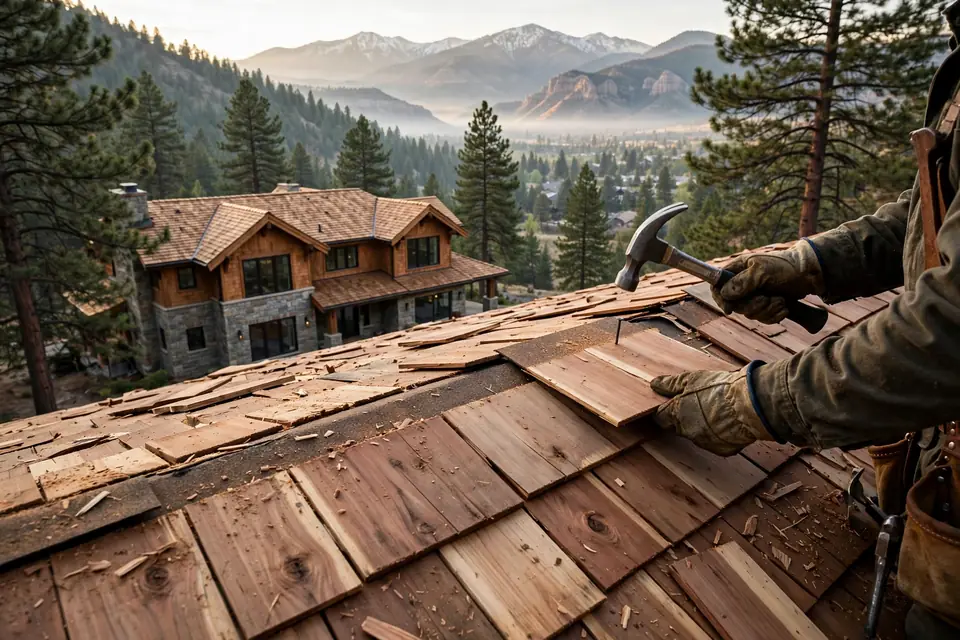
Homeowners in Cottonwood Heights trust Roof Replacement Masters for cedar shake roof replacement: breathable underlayment systems cedar requires. Proudly serving homes up the east bench where elevation means heavier snow on Murray's east bench across the greater Murray area.
In Cottonwood Heights, homes up the east bench where elevation means heavier snow shape every cedar shake roof replacement we do. Because snow-load engineering and ice-dam prevention drive replacements, we pay special attention to the details that fail first on this housing stock — flashing, ventilation, and underlayment — and we document it all with photos during your free inspection.
Need roof replacement in Murray? Call (888) 974-0663 today.
Call NowEmergency Quick CallEvery Roof Replacement Masters replacement in Cottonwood Heights includes full tear-off where specified, new underlayment and flashing, and installation to manufacturer spec — because warranty coverage lives in the details. We protect your landscaping, work in controlled sections, and leave the site spotless. We are open Mon-Fri: 8:00 AM - 6:00 PM, Sat: 9:00 AM - 4:00 PM, Sun: Closed, and our call representatives are available 24/7 for emergencies.
Cedar Shake Replacement Timing and Cost in Cottonwood Heights
Most cedar shake replacement projects in Cottonwood Heights complete in one to three days depending on roof size and complexity. Cost depends on square footage, pitch, access on Murray's east bench, and material choice — which is why we quote in person, with measurements, instead of guessing over the phone.
What we can promise: a written, itemized estimate with no obligation, financing options explained in plain numbers, and premium curb appeal no manufactured product truly matches. Call (888) 974-0663 for your free Cottonwood Heights estimate — we are open Mon-Fri: 8:00 AM - 6:00 PM, Sat: 9:00 AM - 4:00 PM, Sun: Closed, and our call representatives are available 24/7 for emergencies.
Signs You Need Cedar Shake Replacement in Cottonwood Heights
- Visible damage: cracked, curled, or missing roofing material after Murray weather events.
- Interior clues: stains on ceilings or daylight in the attic mean the system has failed, not just the surface.
- Repeat repairs: when annual patch bills approach replacement financing, the math has flipped.
- Energy creep: rising cooling bills can trace back to a roof system — natural cedar with fire-treatment options for code compliance — past its prime.
- Neighborhood pattern: Homes up the east bench where elevation means heavier snow on Murray's east bench often age together; if nearby roofs are being replaced, get yours inspected.
Why Cottonwood Heights Homes Need Cedar Shake Replacement
Homes up the east bench where elevation means heavier snow face a specific challenge: snow-load engineering and ice-dam prevention drive replacements. That is exactly where natural cedar with fire-treatment options for code compliance and breathable underlayment systems cedar requires pay off. During our free Cottonwood Heights assessment we check the failure points most common on Murray's east bench and give you an honest, photo-documented read.
It is not just about the roof surface. That detailing is the difference between a roof that survives Murray weather and one that becomes a recurring repair bill — and it is standard on every Roof Replacement Masters job in Cottonwood Heights.
Related Roofing Services in Cottonwood Heights
Insurance Claim Roof Replacement
Insurance Claim Roof Replacement in Cottonwood Heights, Murray — adjuster meeting support with contractor-grade documentation.
Metal Roof Replacement
Metal Roof Replacement in Cottonwood Heights, Murray — standing-seam and exposed-fastener systems with 40–70 year lifespans.
Partial Roof Replacement
Partial Roof Replacement in Cottonwood Heights, Murray — targeted replacement of damaged sections with matched materials.
Roof Replacement Warranties
Roof Replacement Warranties in Cottonwood Heights, Murray — manufacturer material coverage plus our written workmanship warranty.
Cedar Shake Replacement Near You
Cedar Shake Roof Replacement
Cedar Shake Roof Replacement across Murray, UT — the parent service page.
Roof Replacement in Cottonwood Heights
All replacement services we offer in Cottonwood Heights, Murray.
Cedar Shake Roof Replacement in Taylorsville
Breathable underlayment systems cedar requires for Taylorsville homes.
Cedar Shake Roof Replacement in Fashion Place
Breathable underlayment systems cedar requires for Fashion Place homes.
Helpful Guides
How Much Does Roof Replacement Cost in Murray?
Guide from Roof Replacement Masters.
What Is the Best Season for Roof Replacement in Murray?
Guide from Roof Replacement Masters.
How Cedar Shake Roof Replacement Works in Cottonwood Heights, UT 84121
Cedar near the canyon mouth lives the hardest life of any roofing material in our service area — intense UV, heavy wet snow, freeze-thaw, and canyon winds that lift loosened shakes. The 70s and 80s cedar roofs still hanging on in Cottonwood Heights are past heroic; they're structural liabilities, with skip sheathing that's absorbed decades of moisture and shakes thin enough to see daylight through.
Conversion is the honest recommendation: full tear-off of shakes and compromised skip sheathing, new solid decking, then Class 4 architectural shingles or composite shake. The composite option is particularly popular here — it keeps the dimensional cedar look the neighborhood expects while carrying Class A fire ratings (a real consideration this close to the wildland interface) and 50-year warranties. Insurance carriers reward the conversion too; wood roofs near the canyon are increasingly surcharged or declined.
What changes about the actual work in Cottonwood Heights is the margin for error. At this elevation and snow load, shortcuts that might survive a decade in the valley fail in three winters here. We never install over existing layers in the 84121 — the added weight plus trapped moisture is a structural and warranty risk. Ice-and-water shield runs a full six feet up from every eave (code minimum is less, but code minimum was written for the valley floor), wraps every valley, and seals every penetration.
Ventilation gets engineered, not guessed: balanced intake and ridge exhaust sized to the attic, because a hot attic melts roof snow from below and feeds the ice-dam cycle. On metal roofs we add snow guards over entries, garages, and walkways as standard — a standing-seam roof without them will dump a winter's worth of snow onto your front steps in one slide. These are the details that separate a roof that survives Cottonwood Heights from one that merely covers it.
Murray's climate is hard on cedar: intense high-altitude UV dries and cracks shakes, freeze-thaw splits them, and canyon winds lift the loosened pieces. Fire risk in the wildland-urban interface near the bench makes wood roofs an insurance liability — many carriers now surcharge or non-renew them.
Conversion to Class 4 shingles or composite shake solves all three problems at once: UV-stable materials, freeze-thaw resistance, and Class A fire ratings that insurers prefer. We document the new roof's ratings for your carrier — many homeowners see premium relief that helps offset the project cost.
What to Watch For
On remaining cedar roofs here, watch for shakes breaking off in canyon winds — each missing shake is an open path for wind-driven snow. Moss colonizing shaded slopes signals chronic moisture in the skip sheathing. And check your insurance renewal terms: carriers are actively repricing wood roofs in canyon-adjacent ZIPs.
Related Services in Cottonwood Heights
- Asphalt Shingle Roof Replacement in Cottonwood Heights
- Emergency Roof Replacement in Cottonwood Heights
- Energy-Efficient Cool Roof Replacement in Cottonwood Heights
- Insurance Claim Roof Replacement in Cottonwood Heights
Cedar Shake Roof Replacement Across Murray
- Cedar Shake Roof Replacement in Fashion Place
- Cedar Shake Roof Replacement in Holladay
- Cedar Shake Roof Replacement in Midvale
- Cedar Shake Roof Replacement in Millcreek
Frequently Asked Questions
Can you replace cedar with another material in Cottonwood Heights?
Yes — many Cottonwood Heights homeowners switch to architectural shingles or synthetic cedar for lower maintenance, and we handle the full conversion. Ask us about it during your appointment — we will show you on your own roof.
How long does a cedar roof last in Cottonwood Heights?
A well-installed cedar roof lasts 20–40 years depending on exposure and maintenance — premium grades and proper ventilation stretch it further. Our crews see this pattern weekly on Murray's east bench, and we plan for it.
Cedar shake vs. synthetic cedar — which for Cottonwood Heights?
It is looks vs. lifespan. Synthetic cedar now mimics the real thing convincingly while outlasting it. In Cottonwood Heights, snow-load engineering and ice-dam prevention drive replacements — so this detail matters more here than most places.
Is composite shake worth it over architectural shingles here?
If the cedar look matters to you or your HOA, yes — composite replicates cedar's texture convincingly, carries Class A fire ratings that matter near the canyon, and lasts 50 years. If the look doesn't matter, Class 4 architectural shingles deliver similar protection for less. We'll price both.