
Asphalt Shingle Roof Replacement in Cottonwood Heights, Murray, UT
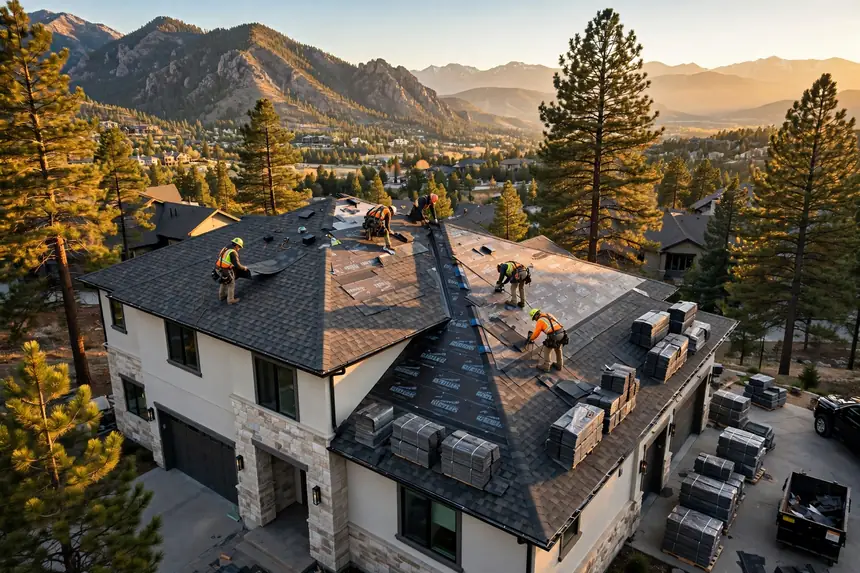
Roof Replacement Masters brings asphalt shingle roof replacement to Cottonwood Heights, Murray — high-wind-rated installation that holds its seal in severe weather. From on Murray's east bench to every surrounding street, our roofing experts handle it start to finish.
For homes up the east bench where elevation means heavier snow, choosing the right asphalt shingle roof replacement matters more than most homeowners expect. Snow-load engineering and ice-dam prevention drive replacements, so we spec every Cottonwood Heights project for the conditions your roof actually faces — not a generic national template. Our process starts with a free, photo-documented inspection: we measure, photograph, and explain exactly what your roof needs and what it does not.
Need roof replacement in Murray? Call (888) 974-0663 today.
Call NowEmergency Quick CallEvery Roof Replacement Masters replacement in Cottonwood Heights includes full tear-off where specified, new underlayment and flashing, and installation to manufacturer spec — because warranty coverage lives in the details. We protect your landscaping, work in controlled sections, and leave the site spotless. We are open Mon-Fri: 8:00 AM - 6:00 PM, Sat: 9:00 AM - 4:00 PM, Sun: Closed, and our call representatives are available 24/7 for emergencies.
What Asphalt Shingle Replacement Includes in Cottonwood Heights
- Architectural shingles carrying 25–50 year manufacturer warranties: specified for Cottonwood Heights conditions, not a one-size-fits-all package.
- Full tear-off to the deck with new synthetic underlayment and flashing: the layers you never see, done to manufacturer spec.
- High-wind-rated installation that holds its seal in severe weather: verified on every Cottonwood Heights project before we call it done.
- Local scheduling on Murray's east bench: we stage and sequence work around Cottonwood Heights's streets and access realities.
How We Handle Asphalt Shingle Replacement in Cottonwood Heights
Homes up the east bench where elevation means heavier snow on Murray's east bench get the same disciplined process on every Roof Replacement Masters job:
- Written scope and fixed pricing: every line item in writing before work begins — no mid-job surprises.
- trained crew, local staging: our crews work on Murray's east bench regularly, so access, parking, and staging are planned, not improvised.
- Installation to spec: full tear-off to the deck with new synthetic underlayment and flashing — the details that keep your warranty valid.
- Final walkthrough: we inspect together, sweep for nails magnetically, and hand over warranty documents.
Asphalt Shingle Replacement Timing and Cost in Cottonwood Heights
Most asphalt shingle replacement projects in Cottonwood Heights complete in one to three days depending on roof size and complexity. Cost depends on square footage, pitch, access on Murray's east bench, and material choice — which is why we quote in person, with measurements, instead of guessing over the phone.
What we can promise: a written, itemized estimate with no obligation, financing options explained in plain numbers, and high-wind-rated installation that holds its seal in severe weather. Call (888) 974-0663 for your free Cottonwood Heights estimate — we are open Mon-Fri: 8:00 AM - 6:00 PM, Sat: 9:00 AM - 4:00 PM, Sun: Closed, and our call representatives are available 24/7 for emergencies.
Related Roofing Services in Cottonwood Heights
Cedar Shake Roof Replacement
Cedar Shake Roof Replacement in Cottonwood Heights, Murray — natural cedar with fire-treatment options for code compliance.
Emergency Roof Replacement
Emergency Roof Replacement in Cottonwood Heights, Murray — call representatives available 24/7 for emergencies.
Energy-Efficient Cool Roof Replacement
Energy-Efficient Cool Roof Replacement in Cottonwood Heights, Murray — reflective shingles, metal, and membrane options rated for solar reflectance.
Insurance Claim Roof Replacement
Insurance Claim Roof Replacement in Cottonwood Heights, Murray — adjuster meeting support with contractor-grade documentation.
Asphalt Shingle Replacement Near You
Asphalt Shingle Roof Replacement
Asphalt Shingle Roof Replacement across Murray, UT — the parent service page.
Roof Replacement in Cottonwood Heights
All replacement services we offer in Cottonwood Heights, Murray.
Helpful Guides
How Much Does Roof Replacement Cost in Murray?
Guide from Roof Replacement Masters.
Roof Repair vs. Replacement: How Murray Homeowners Should Decide
Guide from Roof Replacement Masters.
How Asphalt Shingle Roof Replacement Works in Cottonwood Heights, UT 84121
At the mouth of Big Cottonwood Canyon, an asphalt shingle roof works harder than anywhere else in the valley — and the installation has to respect that. We don't do overlays in the 84121: the added weight on a snow-loaded structure plus trapped moisture is a risk we won't take. Every Cottonwood Heights shingle job is a full tear-off, and the ice-and-water shield runs a full six feet up from every eave, wraps every valley, and seals every penetration — beyond code minimum, because code minimum was written for the valley floor.
Fastening is the other upgrade: six nails per shingle in the reinforced zone, hand-sealed starters at eaves and rakes, because canyon outflow winds find every weak tab. Ventilation gets balanced to the attic volume — a hot attic melts roof snow from below and feeds the ice-dam cycle that destroys eaves here. The result is an architectural shingle roof genuinely engineered for canyon-adjacent snow loads, not just installed at them.
What changes about the actual work in Cottonwood Heights is the margin for error. At this elevation and snow load, shortcuts that might survive a decade in the valley fail in three winters here. We never install over existing layers in the 84121 — the added weight plus trapped moisture is a structural and warranty risk. Ice-and-water shield runs a full six feet up from every eave (code minimum is less, but code minimum was written for the valley floor), wraps every valley, and seals every penetration.
Ventilation gets engineered, not guessed: balanced intake and ridge exhaust sized to the attic, because a hot attic melts roof snow from below and feeds the ice-dam cycle. On metal roofs we add snow guards over entries, garages, and walkways as standard — a standing-seam roof without them will dump a winter's worth of snow onto your front steps in one slide. These are the details that separate a roof that survives Cottonwood Heights from one that merely covers it.
Murray's snow and freeze-thaw cycles shape every shingle roof we install: ice-and-water shield runs generously at eaves (beyond code minimum), valleys get woven membrane protection, and attic ventilation is balanced so winter heat doesn't melt roof snow from below and feed ice dams. On the east bench and canyon-adjacent areas, we upgrade fastening for wind and snow load.
Material choice follows exposure: lighter shingle colors for sun-blasted south slopes, algae-resistant granules on tree-shaded lots, Class 4 impact shingles where hail history warrants. The estimate reflects your home's actual conditions — slope, complexity, decking, access — never a flat template price.
What to Watch For
Watch the north-facing slopes and shaded valleys first — that's where ice dams form and where granular loss hides longest. After any major canyon storm, check for lifted tabs along rakes and ridges from outflow winds. And keep valleys clear: decomposed debris holds moisture against shingle edges and rots the valley from underneath faster than sun ages the field.
Related Services in Cottonwood Heights
- Cedar Shake Roof Replacement in Cottonwood Heights
- Emergency Roof Replacement in Cottonwood Heights
- Energy-Efficient Cool Roof Replacement in Cottonwood Heights
- Insurance Claim Roof Replacement in Cottonwood Heights
Asphalt Shingle Roof Replacement Across Murray
- Asphalt Shingle Roof Replacement in Fashion Place
- Asphalt Shingle Roof Replacement in Holladay
- Asphalt Shingle Roof Replacement in Midvale
- Asphalt Shingle Roof Replacement in Millcreek
Frequently Asked Questions
Can you install new shingles over my old roof in Cottonwood Heights?
We recommend full tear-off. A second layer hides deck damage, adds weight, voids most manufacturer warranties, and shortens the new roof's life. Free inspection, honest answer: call (888) 974-0663 and we will tell you exactly where you stand.
Do you handle HOA or design-review approvals in Cottonwood Heights?
We handle the paperwork: shingle specs, colors, and warranty docs formatted for HOA and design-review boards in Cottonwood Heights. Roof Replacement Masters documents it all with photos during your free Cottonwood Heights assessment.
Architectural vs. three-tab shingles for a Cottonwood Heights home — which is better?
Architectural shingles in almost every case: better wind ratings, longer warranties, and far better curb appeal for a modest price difference. Free inspection, honest answer: call (888) 974-0663 and we will tell you exactly where you stand.
How long will architectural shingles last in Cottonwood Heights?
A properly installed architectural shingle roof typically delivers 22 to 28 years here — slightly less than the valley floor because of the heavier snow and UV. Six-nail fastening, full ice-and-water shield, and balanced ventilation are what get you to the top of that range. We warranty our workmanship accordingly.