
Partial Roof Replacement in Cottonwood Heights, Murray, UT
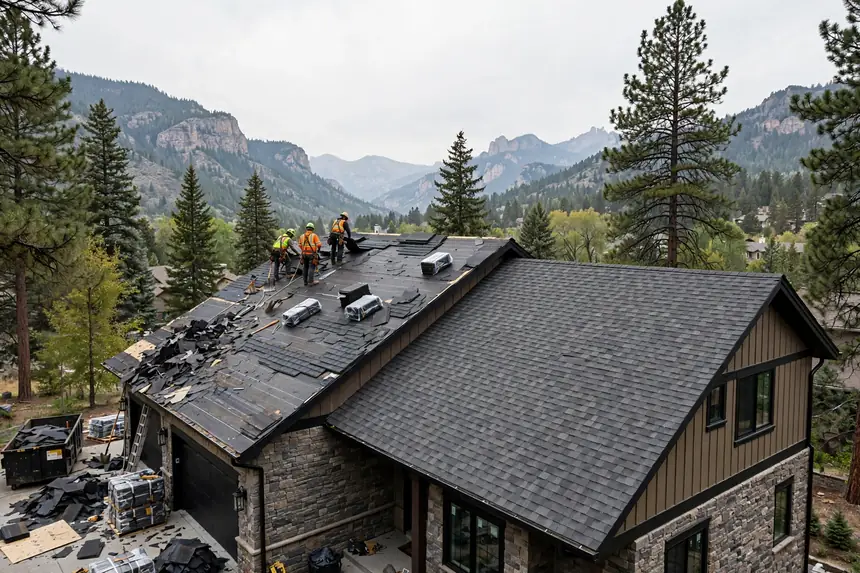
Roof Replacement Masters brings partial roof replacement to Cottonwood Heights, Murray — full warranty on our work for the replaced sections. From on Murray's east bench to every surrounding street, our roofing experts handle it start to finish.
For homes up the east bench where elevation means heavier snow, choosing the right partial roof replacement matters more than most homeowners expect. Snow-load engineering and ice-dam prevention drive replacements, so we spec every Cottonwood Heights project for the conditions your roof actually faces — not a generic national template. Our process starts with a free, photo-documented inspection: we measure, photograph, and explain exactly what your roof needs and what it does not.
Need roof replacement in Murray? Call (888) 974-0663 today.
Call NowEmergency Quick CallEvery Roof Replacement Masters replacement in Cottonwood Heights includes full tear-off where specified, new underlayment and flashing, and installation to manufacturer spec — because warranty coverage lives in the details. We protect your landscaping, work in controlled sections, and leave the site spotless. We are open Mon-Fri: 8:00 AM - 6:00 PM, Sat: 9:00 AM - 4:00 PM, Sun: Closed, and our call representatives are available 24/7 for emergencies.
Partial Replacement Timing and Cost in Cottonwood Heights
Most partial replacement projects in Cottonwood Heights complete in one to three days depending on roof size and complexity. Cost depends on square footage, pitch, access on Murray's east bench, and material choice — which is why we quote in person, with measurements, instead of guessing over the phone.
What we can promise: a written, itemized estimate with no obligation, financing options explained in plain numbers, and full warranty on our work for the replaced sections. Call (888) 974-0663 for your free Cottonwood Heights estimate — we are open Mon-Fri: 8:00 AM - 6:00 PM, Sat: 9:00 AM - 4:00 PM, Sun: Closed, and our call representatives are available 24/7 for emergencies.
Signs You Need Partial Replacement in Cottonwood Heights
- Visible damage: cracked, curled, or missing roofing material after Murray weather events.
- Interior clues: stains on ceilings or daylight in the attic mean the system has failed, not just the surface.
- Repeat repairs: when annual patch bills approach replacement financing, the math has flipped.
- Energy creep: rising cooling bills can trace back to a roof system — targeted replacement of damaged sections with matched materials — past its prime.
- Neighborhood pattern: Homes up the east bench where elevation means heavier snow on Murray's east bench often age together; if nearby roofs are being replaced, get yours inspected.
Why Cottonwood Heights Homes Need Partial Replacement
Homes up the east bench where elevation means heavier snow face a specific challenge: snow-load engineering and ice-dam prevention drive replacements. That is exactly where targeted replacement of damaged sections with matched materials and proper tie-ins between new and existing roofing pay off. During our free Cottonwood Heights assessment we check the failure points most common on Murray's east bench and give you an honest, photo-documented read.
It is not just about the roof surface. That detailing is the difference between a roof that survives Murray weather and one that becomes a recurring repair bill — and it is standard on every Roof Replacement Masters job in Cottonwood Heights.
Related Roofing Services in Cottonwood Heights
Roof Tear-Off & Redecking
Roof Tear-Off & Redecking in Cottonwood Heights, Murray — deck inspection sheet by sheet — soft or rotted sections replaced, never roofed over.
Roof Ventilation Upgrade
Roof Ventilation Upgrade in Cottonwood Heights, Murray — balanced intake and exhaust engineered for your attic volume.
Skylight Replacement During Reroof
Skylight Replacement During Reroof in Cottonwood Heights, Murray — new skylights flashed directly into the new roofing system.
Storm Damage Roof Replacement
Storm Damage Roof Replacement in Cottonwood Heights, Murray — hail and wind damage documentation with photo reports adjusters accept.
Partial Replacement Near You
Partial Roof Replacement
Partial Roof Replacement across Murray, UT — the parent service page.
Roof Replacement in Cottonwood Heights
All replacement services we offer in Cottonwood Heights, Murray.
Partial Roof Replacement in Wheeler Farm
Proper tie-ins between new and existing roofing for Wheeler Farm homes.
Partial Roof Replacement in Murray Park
Proper tie-ins between new and existing roofing for Murray Park homes.
Helpful Guides
Roof Repair vs. Replacement: How Murray Homeowners Should Decide
Guide from Roof Replacement Masters.
7 Signs Your Murray Home Needs a Roof Replacement
Guide from Roof Replacement Masters.
How Partial Roof Replacement Works in Cottonwood Heights, UT 84121
Partial replacement at the canyon mouth makes sense in specific cases: wind damage confined to the windward slope, a south slope cooked years ahead of the shaded north slope, or ice-dam destruction isolated to one eave zone. The key is verified isolation — the remaining slopes genuinely have years left, confirmed by inspection, not assumed. We replace the failed section as a complete system: full tear-off of the area, ice-and-water shield, six-nail shingles, all-new flashing at the tie-ins.
The critical craft is the transition: new courses woven or step-flashed into existing shingles so the boundary is watertight and visually clean, with membrane bridging beneath. On canyon-zone homes the new section gets the full snow detailing — extended ice-and-water shield, enhanced fastening — because a partial job in the 84121 still has to survive canyon winters. The new section carries its own workmanship warranty, documented with photos.
What changes about the actual work in Cottonwood Heights is the margin for error. At this elevation and snow load, shortcuts that might survive a decade in the valley fail in three winters here. We never install over existing layers in the 84121 — the added weight plus trapped moisture is a structural and warranty risk. Ice-and-water shield runs a full six feet up from every eave (code minimum is less, but code minimum was written for the valley floor), wraps every valley, and seals every penetration.
Ventilation gets engineered, not guessed: balanced intake and ridge exhaust sized to the attic, because a hot attic melts roof snow from below and feeds the ice-dam cycle. On metal roofs we add snow guards over entries, garages, and walkways as standard — a standing-seam roof without them will dump a winter's worth of snow onto your front steps in one slide. These are the details that separate a roof that survives Cottonwood Heights from one that merely covers it.
Murray's climate creates the classic partial-replacement scenario: south and west slopes age years faster than shaded north slopes under our intense UV, and wind events often damage one exposure while sparing others. We see it constantly — a 20-year-old roof with a 25-year-old south slope and a 15-year-old north slope.
The honest local guidance: partial makes sense when the age gap between sections is real and the sound sections have 8-plus years left. When everything's within a few years of done, full replacement costs less per year of service. We'll put both numbers in front of you.
What to Watch For
Verify the isolation honestly: if the 'good' slopes are within a few years of the failed one's age, partial just buys a second mobilization later. Check that the tie-in falls on a natural break (ridge, valley, wall) where the transition is cleanest. And confirm the new section's snow detailing matches the microclimate — partial doesn't mean partial standards.
Related Services in Cottonwood Heights
- Asphalt Shingle Roof Replacement in Cottonwood Heights
- Cedar Shake Roof Replacement in Cottonwood Heights
- Emergency Roof Replacement in Cottonwood Heights
- Energy-Efficient Cool Roof Replacement in Cottonwood Heights
Partial Roof Replacement Across Murray
- Partial Roof Replacement in Fashion Place
- Partial Roof Replacement in Holladay
- Partial Roof Replacement in Midvale
- Partial Roof Replacement in Millcreek
Frequently Asked Questions
What if you find more damage mid-job in Cottonwood Heights?
We stop, photograph it, and price the additional work before proceeding — you approve every dollar beyond the original scope. Free inspection, honest answer: call (888) 974-0663 and we will tell you exactly where you stand.
Can you match my existing shingles in Cottonwood Heights?
We source the closest current match and blend the tie-in so it reads as one roof — exact matches on discontinued lines are not always possible. In Cottonwood Heights, snow-load engineering and ice-dam prevention drive replacements — so this detail matters more here than most places.
How do you tie new roofing into old in Cottonwood Heights?
We weave or step-flash the transition, replace underlayment back to sound material, and detail valleys so water cannot find the seam. Ask us about it during your appointment — we will show you on your own roof.
Will the new section handle canyon snow like a full replacement would?
Yes — the new section is built to full canyon-zone standards: extended ice-and-water shield, six-nail fastening, proper ventilation tie-in. Partial refers to the area, not the quality. The rest of the roof keeps its existing (adequate) protection.